
Table of Contents
- Why the Throws Are Unique
- Shot Put: Power and Precision
- Discus: Rhythm, Balance, and Timing
- Hammer: Speed Through Turns
- Javelin: Speed, Bracing, and Coordination
- Training Themes That Apply to All Throws
- Safety Matters
- Closing Thoughts
Why the Throws Are Unique
Throws events are among the most technical disciplines in track and field. While strength is important, distance is often determined by timing, positioning, and speed of movement, not simply by size or raw power. Each implement also demands a different blend of athletic qualities: some emphasize rotational rhythm, others emphasize sprint-like speed, and all require strong coordination.
For athletes and parents new to the throws, it helps to think of them this way: the goal is always distance, but the pathway is different in each event because the implement behaves differently in the air and in the hand.
Shot Put: Power and Precision
Shot put looks simple from a distance, but it is highly technical. The thrower must accelerate the shot and deliver it with high speed from a stable, powerful position inside the ring. Studies and biomechanical reports repeatedly highlight that release velocity is a major driver of performance, with release angle and body position contributing to efficient delivery.
Two main styles are commonly discussed in coaching literature:
- Glide technique (linear)
- Rotational technique (spin)
Regardless of style, shot put success typically comes down to:
- building strong positions (hips, trunk, and shoulder alignment),
- learning to transfer force smoothly,
- and delivering the shot with speed at release.
Discus: Rhythm, Balance, and Timing
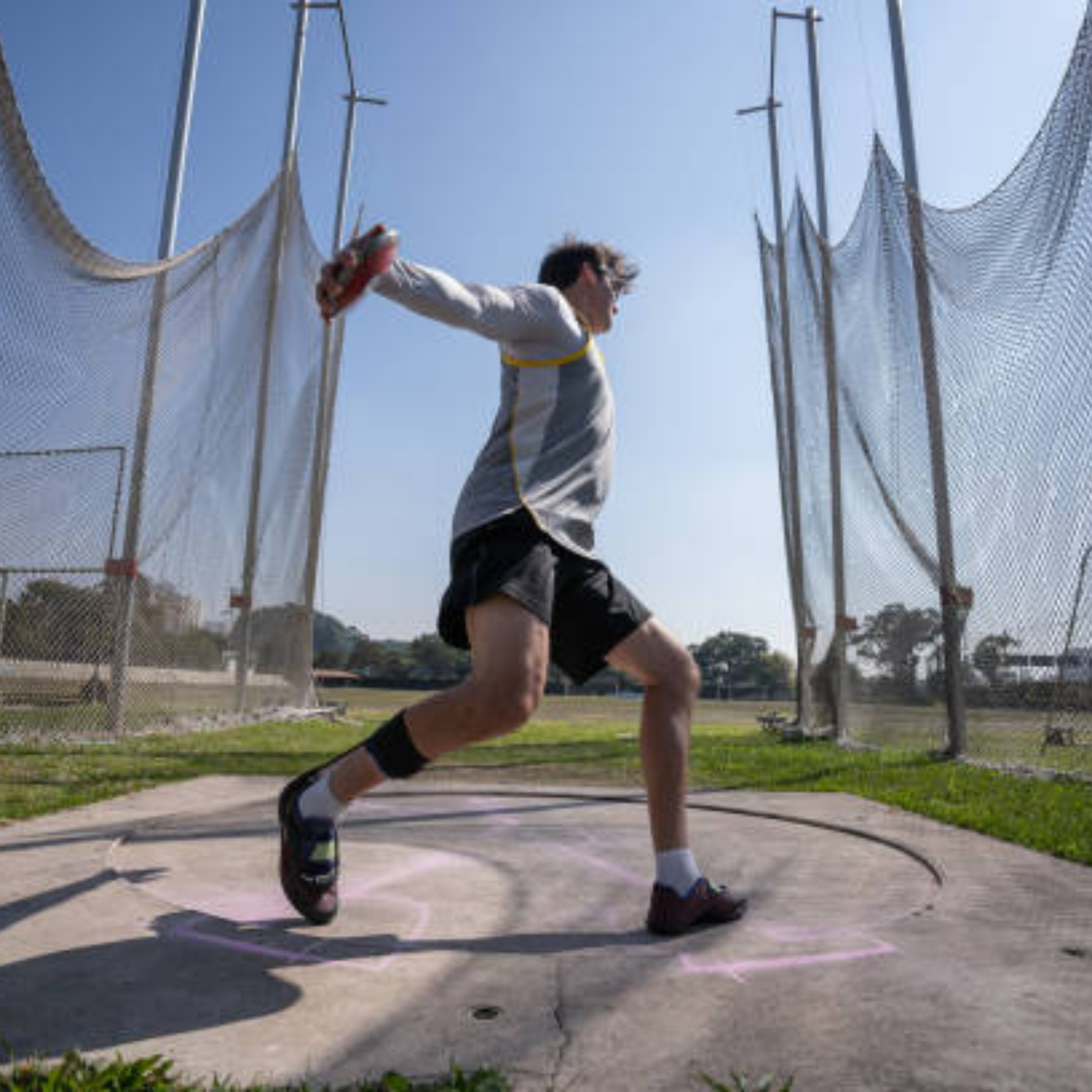
Discus is often described as the “rhythm throw.” The event rewards athletes who can stay relaxed, balanced, and connected through the turn, building speed into the implement without losing posture. World Athletics biomechanics “flash analysis” type reports show how elite throwers maintain key positions and manage the sequence of movement through the throw.
What discus teaches athletes:
- balance under rotation,
- smooth acceleration rather than forcing the throw,
- and patience, because the best release comes from the correct sequence.
Hammer: Speed Through Turns
Hammer is one of the most technical throws. Distance is created by generating speed through repeated turns while maintaining posture, timing, and control. The athlete must keep the hammer moving on a consistent path and gradually accelerate it, which requires rhythm and strong footwork.
Hammer also brings a key conversation that other events don’t always require at the youth level: facility safety. Hammer must be trained in proper cages and controlled environments.
Javelin: Speed, Bracing, and Coordination
Javelin is often considered the most “athletic” of the four throws because it combines sprinting, rhythm, timing, and upper-body mechanics into one fluid sequence. Unlike the rotational events, the javelin requires a controlled approach run before the throw, which means the athlete must generate speed without losing posture or balance.
One of the most important concepts in javelin is bracing. As the athlete transitions from the run-up into the delivery phase, the front leg must plant firmly and create a stable base. This “block” allows energy generated from the legs and hips to transfer efficiently through the torso and into the throwing arm. When the brace is weak or mistimed, force leaks and distance suffers.
Proper javelin technique emphasizes:
- Controlled acceleration during the approach
- Strong posture through the crossover steps
- Hip-to-shoulder separation during the delivery phase
- A stable front leg at release
- A high and smooth follow-through
Javelin also demands significant shoulder mobility and strength. Because of the overhead throwing motion, athletes must build stability in the rotator cuff and surrounding muscles to support healthy mechanics. Core strength and hip mobility are equally important, as power originates from the lower body and transfers upward.
Another key factor is timing. Unlike shot put or discus, where the implement remains connected to the hand through rotation, javelin performance relies heavily on synchronizing speed with the release moment. The best throws occur when the athlete maintains balance while transferring forward momentum into the implement efficiently.
For youth athletes, technical mastery is far more important than raw arm strength. Learning proper positions early not only improves performance but also supports long-term shoulder health and consistency.
Training Themes That Apply to All Throws
Even though each throw is different, several training themes apply across all four:
Technique first
The throws are skill events. The best athletes build distance by mastering positions, sequence, and timing.
Strength is specific
Throwers need strength, but it must support correct mechanics. Rotational strength, trunk stability, and coordinated leg drive matter more than “lifting heavy” without purpose.
Mobility and stability reduce risk.
Shoulders, hips, thoracic spine mobility, and core stability are huge performance factors, especially for growing athletes.
Quality reps beat volume.
Throwing is high intensity. A smaller number of high-quality throws with feedback often beats a high-volume session where technique breaks down.
Safety Matters
All throws require coaching and a controlled environment, but hammer and javelin especially demand strict attention to safety, spacing, supervision, and proper facility setup. This is one reason why structured training environments and qualified coaching matter so much in the throws.
Closing Thoughts
Discus, hammer, javelin, and shot put each build a different type of athlete, but they share something powerful: they teach athletes how to combine strength, skill, patience, and focus into one moment of execution.
If your athlete is interested in learning or improving in the throws, 12th Rock offers training opportunities designed to build technique safely and progressively. Visit https://12throck.org/ or call 845-692-9092 to learn more about training and upcoming opportunities.